 StandlyTick
About Us
Improving posture, circulation, and wellness in modern workspaces.
StandlyTick
Improving posture, circulation, and wellness in modern workspaces.
For about a decade, I was on construction sites as a civil engineer. That is the sort of job that means you are always on your feet, walking around the site, solving problems as they arise, rarely sitting down for more than half an hour at a time. My body was made for movement, and I never noticed.
Then I made a career change.
Transitioning into freelance as a web developer and digital product builder. My whole working day changed pretty much overnight: the laptop use, long sitting feels like an arcade, almost no movement. That contrast was instant, and immediate effects. My lower back was sore. The fatigue in the afternoon that I have never experienced on a construction site. A body that had been moving for years, now grounded.
My best work as an engineer instinct has always been to fix it in the same way: figure out what system caused the problem, find solutions, and make sure the system is running well. So I got curious about what sitting in a chair for long hours every day was actually doing to my body, and the clinical picture was now obvious: compressed spine, poor circulation, increased cardiovascular risk, and cognitive fatigue. Not a comfort problem. A health problem.
Then I couldn't find a tool that addressed all of it together. Most timers simply instructed you to go on break. None of them dictated what would happen on that break, or adjusted to your mass and hours worked. I sat down and made one first to self-serve, then to anyone who spends hours bumming around at their desk.
StandlyTick is the result of an engineer's approach to a real daily problem: structured, evidence-based, and designed to disappear quietly into your day without asking for your attention.
— Founder, StandlyTick
The average office worker sits for over 8 hours a day. That's not just uncomfortable, it's a clinically recognised health risk. Prolonged sitting compresses spinal discs, slows blood circulation, raises cardiovascular risk, and quietly drains cognitive focus.
StandlyTick was built to help solve this with zero friction. No wearable. No app to download. Just an intelligent, beautiful timer that lives in your browser and guides your body through a scientifically structured movement cycle automatically.
StandlyTick is for anyone who works at a desk, from the occasional laptop session to the full hours focused workday. It requires no setup beyond entering your weight and work hours. It runs quietly in your browser, alerting you with a soft marble chime at each phase transition so you never have to watch a timer.
StandlyTick divides your workday into over four repeating phases, calculated from your body weight and daily work hours:
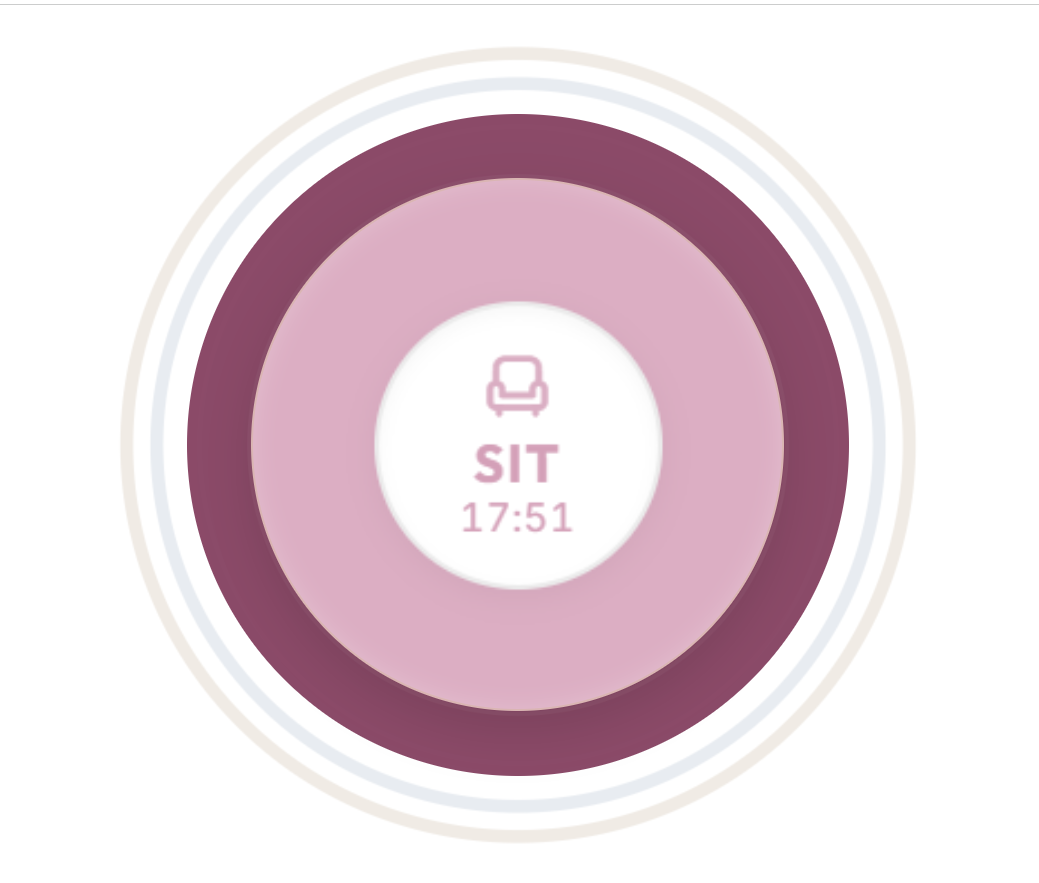
Your primary work window. StandlyTick shortens this phase the heavier you are or the longer your workday, protecting your spinal discs from cumulative compression. For most people, this ranges from 30 to 45 minutes per cycle.
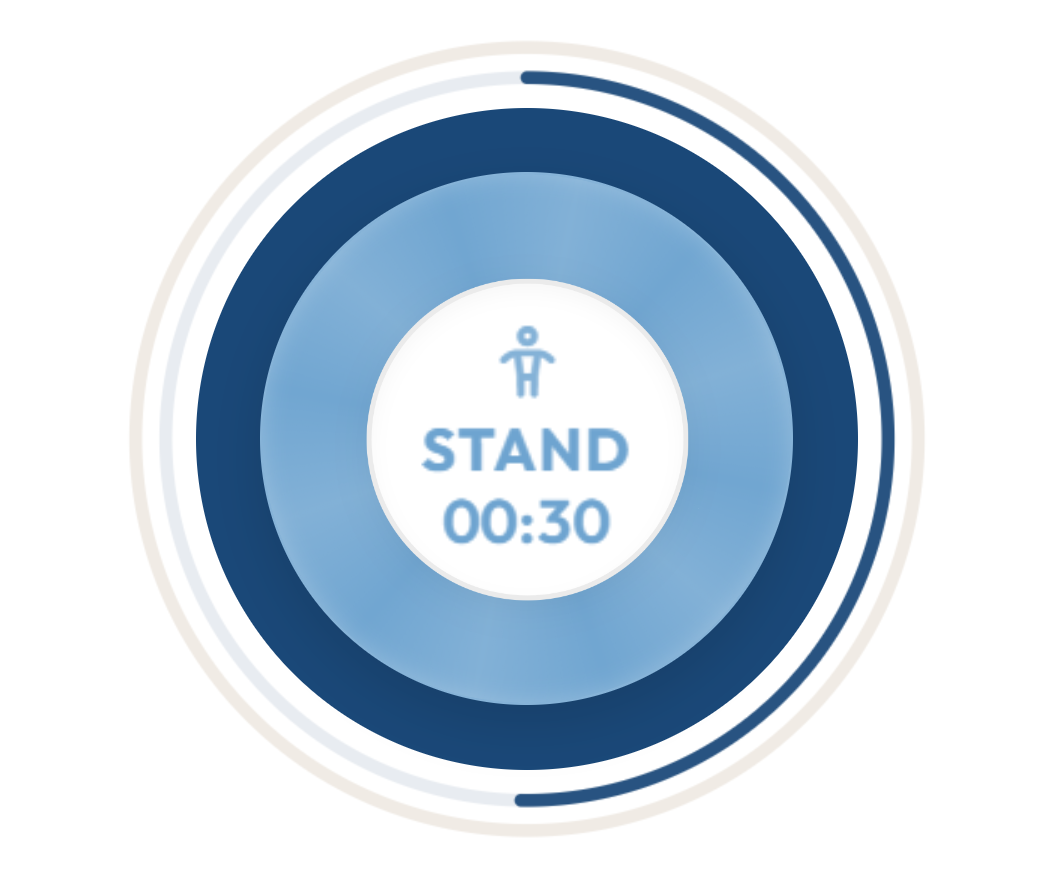
A brief, fixed-duration break designed to decompress the spine and trigger the first flush of blood that has pooled in your lower body. Short by design, long enough to matter, short enough never to interrupt flow.
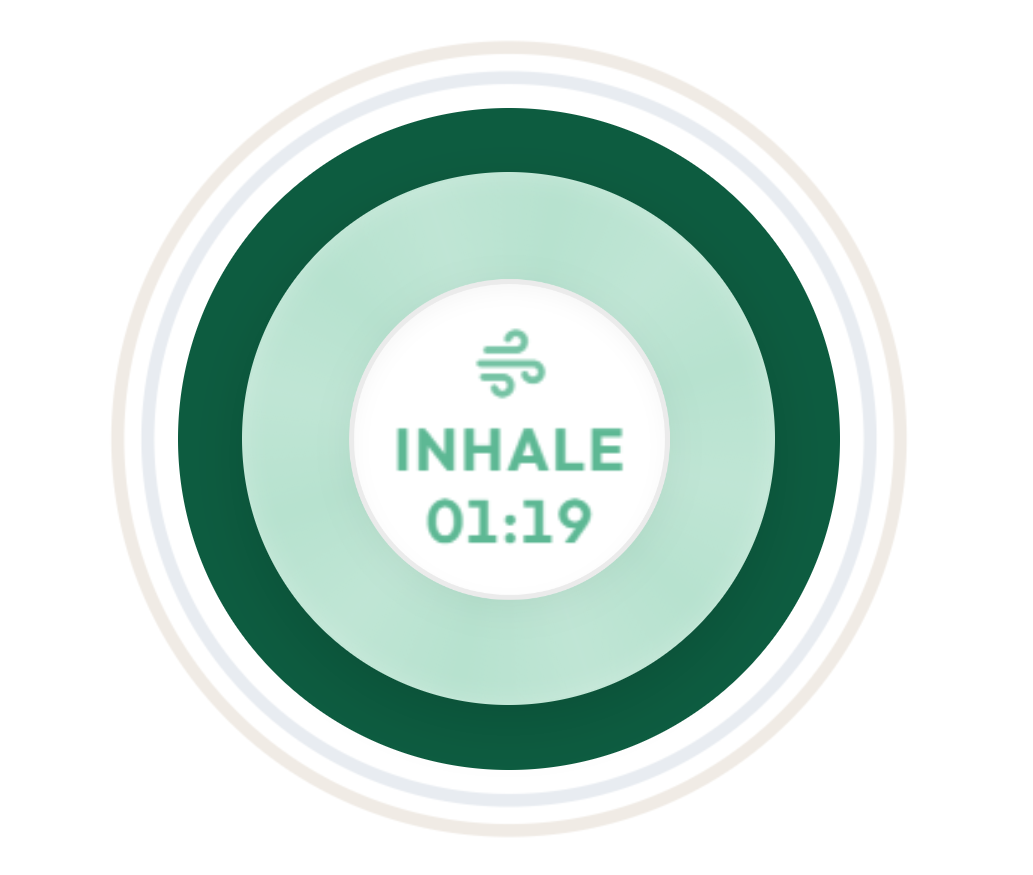
A guided box-breathing sequence (4+4+4+4), (Inhale · Hold · Exhale · Hold) that increases blood oxygen, lowers cortisol, and clears mental fatigue. Extended to 96 seconds for those working more than 8 hours, when cognitive load peaks.
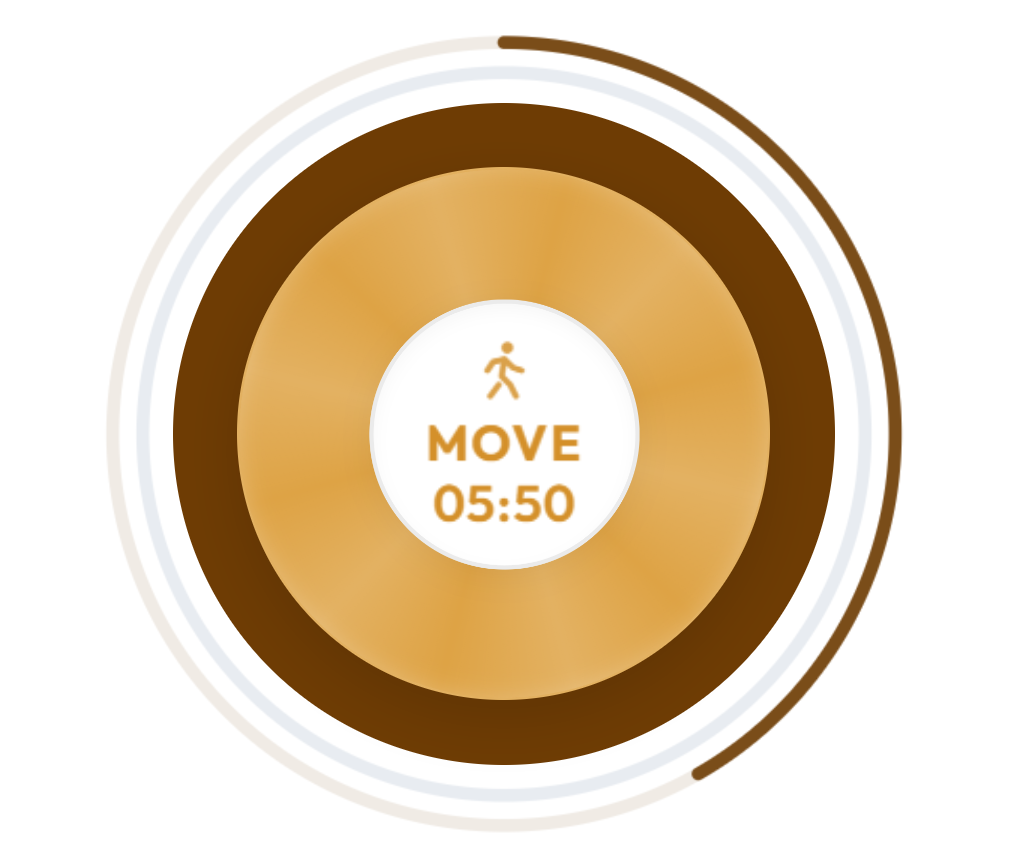
The most variable phase. Duration scales directly with body weight and work hours, from 5 minutes for lighter, shorter days up to 10 minutes for heavier, longer sessions. This is where pooled blood in the legs gets fully recirculated, and the body resets for the next cycle.
No subscriptions, no data tracking. Just pure health. If this tool saved your back today, a coffee keeps it running.
☕ Buy me a coffeeStandlyTick's phase durations are grounded in three authoritative bodies of research:
BackCare is the UK's leading charity for spinal health, working alongside healthcare professionals and NHS links to promote back safety and prevent damage caused by modern desk work.
Medical biomechanics show that when you sit, the natural curve of your lower back flattens, significantly increasing the physical load on your spinal discs compared to standing. Over time, the supportive muscles around your spine gradually deactivate and weaken from inactivity.
BackCare advocates for breaking up long periods of sitting by regularly alternating between sitting, standing, and walking. This simple routine interrupts the harmful cycle of static loading, keeping the muscles engaged and effectively relieving lower back pain.
The American Heart Association (AHA) has shaped cardiovascular health research and policy worldwide for nearly a century. In recent years, it has highlighted a risk factor most people overlook entirely: sitting.
Prolonged sitting is an independent cardiovascular risk factor. It harms the heart through its own mechanisms separate from whether you exercise. A person who works out every morning but sits motionless for long hours at a desk is still at meaningful cardiac risk from sitting alone.
The most effective intervention is the simplest: brief, regular walks distributed across the working day. Not a workout, just movement, repeated consistently. This interrupts the harmful cycle that prolonged sitting sets in motion.
The World Health Organization (WHO) classifies continuous desk-based office work as sedentary behaviour, identifying prolonged sitting without breaks as a critical health risk.
Desk workers are consistently among the highest-risk groups for these systemic health issues because the modern office routine enforces stillness. The simplest and most scalable solution is to interrupt this sedentary cycle using light activity.
Incorporating brief, regular walks and standing intervals into the workday breaks the harmful patterns of physical inactivity. Using subtle digital reminders or structured cues can effectively prompt workers to move, protecting long-term health through consistent, daily habits.
No more than 30–45 minutes. StandlyTick calculates your personal limit automatically based on your weight and work hours.
Enter your weight and daily work hours, the tool sets all four phase durations for you. Heavier users and longer work days get shorter sit times and longer walk breaks.
A 64–96 second guided box-breathing sequence (Inhale · Hold · Exhale · Hold) that clears mental fatigue and lowers stress between sitting and walking. Extends to 96 s if you work more than 8 hours.
Just a slow walk around your room or corridor, 5 to 10 minutes depending on your profile. The goal is to flush blood pooled in your legs, not to raise your heart rate.
It signals a phase transition, time to change position. That is the only sound StandlyTick makes, no pop-ups, no banners, no notifications.
No. Nothing is stored, tracked, or shared. Your weight and work hours stay on your device and are used only to run the timer. No account required.
Yes — completely free. No account, no subscription, no install. Open your browser, enter two numbers, and start.
Yes, static standing causes leg fatigue and joint stress. That's why the STAND phase is only (30-45-60 sec). StandlyTick is a movement cycle, not a standing-all-day tool.
Yes. The chime sounds even if you're in another tab or application. No window needs to stay open or in focus.
No. It's a preventive tool for healthy desk workers built on WHO, BackCare UK, and AHA guidelines. If you have a chronic condition or injury, consult your specialist first.